
Tongue Tie

Understanding Tongue Tie
Medically known as ankyloglossia, tongue tie is a condition where the tongue’s movement is restricted due to an unusually tight or short lingual frenulum. This condition can affect children and adults, leading to various oral health and functional issues.
Tongue tie treatment in Niceville has been made easy at May Bay Dental – we offer comprehensive tongue tie treatment, including Orofacial Myofunctional Therapy, to help individuals of all ages overcome the challenges associated with tongue tie. Tongue tie occurs when the thin membrane (frenulum) that attaches the tongue to the floor of the mouth is too short or tight. This restriction affects the tongue’s ability to move freely, impacting essential functions such as speaking, swallowing, and proper oral posture.
What Causes Tongue-Tie?
Tongue-tie is a congenital condition, meaning it is present at birth. It occurs when the lingual frenulum does not separate or lengthen properly during fetal development. While the exact cause isn’t always known, tongue-tie can sometimes run in families, suggesting a genetic component.
In many cases, tongue-tie may go undiagnosed during childhood and continue into adulthood. Over time, restricted tongue movement can contribute to oral health concerns, muscle strain, and functional challenges that affect everyday activities such as speaking, eating, and maintaining proper oral posture.
Early evaluation and timely treatment can help prevent long-term complications and improve overall oral function.
Symptoms of Tongue Tie in Adults
Tongue-tie is often associated with infants, but many adults experience symptoms without realizing the underlying cause. The severity of symptoms can vary depending on the degree of restriction.
Common signs of tongue tie in adults include:
- Difficulty speaking clearly or pronouncing certain sounds
- Limited tongue mobility or inability to lift the tongue properly
- Jaw, neck, or facial muscle tension
- Chronic headaches or discomfort related to muscle strain
- Difficulty swallowing or chewing efficiently
- Mouth breathing or improper oral posture
- Gum recession or spacing issues due to abnormal tongue pressure
If left untreated, tongue-tie can contribute to ongoing discomfort and oral health issues.
Treatment for Tongue-Tie
At Mid Bay Dental, tongue tie treatment in Niceville is tailored to each patient’s needs, age, and level of restriction. Our goal is to restore proper tongue function while supporting long-term oral health and comfort.
- Comprehensive Evaluation
Treatment begins with a thorough assessment of tongue mobility, oral function, and overall symptoms. This allows us to determine the most effective treatment approach for lasting results.
- Orofacial Myofunctional Therapy
Orofacial Myofunctional Therapy plays a key role in tongue-tie treatment. This therapy focuses on retraining the muscles of the tongue, lips, and face to promote proper movement, posture, and function. It is often recommended before and after corrective procedures to ensure optimal outcomes.
- Ongoing Support and Follow-Up
Successful tongue-tie treatment doesn’t end with a procedure. Follow-up care and therapy help reinforce proper muscle function and prevent recurrence of symptoms.
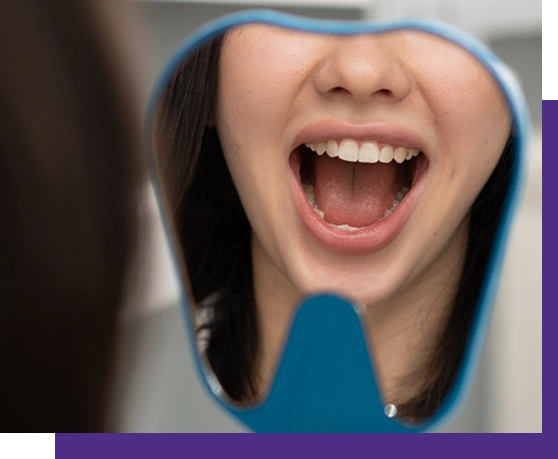
The lingual frenulum is a small fold of mucous membrane that extends from the floor of the mouth to the midline of the underside of the tongue. Find your own lingual frenulum by looking in the mirror, opening you mouth, and stretching your tongue towards the palate. See the whitish cord beneath your tongue? Ankyloglossia or tongue tie, is simply a lingual frenulum that is tight enough to restrict the movement of the tongue. It is a congenital oral anomaly caused by an unusually thick, or unusually short, lingual frenulum.
The infant frenectomy is a straightforward outpatient procedure that can be completed during the same visit as the initial assessment. If a release is recommended, the treatment takes only a few minutes and a baby can go to the breast immediately following. The baby is swaddled and safety goggles are always used to protect baby’s eyes – I use a pen-sized laser on infants to remove the tight lingual frenulum. I apply an effective topical anesthetic gel on the frenular tissue prior to treatment, allowing for zero to minimal discomfort during the procedure. The anesthetic lasts for approximately 30 minutes.
Yes, indeed it can. Untreated tongue ties in infants can lead to difficulty chewing and swallowing firmer foods, altered jaw and dental development including a high palate and narrow facial structure, poor sleep patterns, mouth breathing, and increased gas and bloating resulting from poor tongue coordination and corresponding swallowing of air. Significant ties may result in delayed speech development due to the tongue being restricted in movement. Also, when tongue movement is restricted, the tongue cannot sweep across tooth surfaces and spread saliva, both crucial to oral cleansing.
Studies have shown that an infant with ankyloglossia can have issues latching, gaining weight, creating suction and staying awake during feeds due to the extra exertion required. In addition, mothers with infants who are tongue tied may experience significant pain in their nipples, to the extent that they can become cracked and abscessed. If symptoms including inadequate latch, poor breast draining, painful nipples and/or fussiness at the breast have not improved and a lactation consultant is concerned about a possible tongue tie, she will refer over mom and baby.
Breastfeeding is encouraged immediately following the procedure, however typically there is a healing period that your infant must undergo before the full benefits are realized. I teach each mother proper active wound management and daily stretching exercises in order to facilitate healing. As explained in another post, I cannot stress enough the importance of continued lactation support following the frenectomy procedure. Post-treatment follow up is just as important as pre-treatment care. I send a detailed report of my assessment and/or procedure to the lactation consultant and stay up to date with baby’s progress after our 4-day follow up. Baby will continue to build strength over the healing period and will require further guidance on developing positive breastfeeding habits.
It is not only the tongue and jaw that prove to be key components in breastfeeding but in fact, the whole body. For this reason, tongue tied babies often have additional structural stressors to be addressed and I will recommend taking baby to see a bodyworker, a licensed professional such as an occupational, craniosacral or physical therapist. Bodywork encourages body awareness and encourages an infant to express postural reflexes and explore natural movement inclinations through the nervous system. After a tongue tie release, the infant’s tongue will need to adapt to a new and profound range of motion.
Hear from our Patients
“I have suffered from TMJ pain, headaches and neck pain for years. I have tried countless therapies to attempt to get some relief. I tried massage therapy, chiropractic adjustments, neurology consults, and even completed orthodontic treatment. All just to find them to be a temporary Band-Aid that only masked the pain short-term. After finding no real success, I figured my pain must just be a side effect of getting older, daily life, stress, and my career field. I dealt with this pain for years until it got to the point to wear my TMJ got so bad that my jaw and ears hurt constantly, and it was uncomfortable to eat and even talk. Then I remembered the only treatment I had not tried for my TMJ issues that my dentist had suggested to me prior to orthodontic treatments was splint therapy. I initially went with the orthodontics treatment to line up my bite because it would also straighten my smile at the same time. I thought splint therapy would not be a permanent fix and really did not like the thought of having to wear those devices. However, once I got to the point of this much pain, I was willing to try anything! That is when my dentist introduced me to Lee and the new option of Myofunctional Therapy instead of splinting, and my life has been forever changed!
Lee explained the treatment to me and did a full assessment of my oral capabilities. She explained to me issues that I had never even noticed before, I was blown away! She discovered that I was slightly tongue tied, had tongue thrust, mouth breathed, swallowed air, and had improper muscle movements during chewing activities. She explained to me how these conditions could be causing added stress to my jaw and neck which could be leading to the increased areas of pain I had been experiencing for years.
I am so thankful that I met Lee, and highly recommend her to everyone I can. She is an amazing person and such a joy to work with! Her passion for her career field and the success of her patients is admirable. She developed a treatment plan specifically for my needs and was there for me every step of the way. Since I have completed my treatment with Lee, I can honestly say I now have more pain free days than ever before! I no longer push my teeth with my tongue, instead my tongue is resting comfortably in the proper position on my upper palate. I am also more aware of my breathing and swallowing patterns and correct them instantly. I will never forget these life changing habits she taught me. I am so grateful for Lee and her dedication to helping others with this therapy.
-Amy P.★★★★★
At age 6, my son Kai began having issues with constantly clicking, clearing his throat, and making random loud noises. I was concerned that there was a medical reason for this and sought out advice. The doctors determined that he had allergies and mild asthma. He went through 4 years of treatment for allergies – including inhalers, oral medications, and immunotherapy. None of these treatments seemed to help. We searched for more answers and he was treated for acid reflux. This was the first option that made any difference, but as soon as he discontinued the medication, the clicking and throat clearing returned. We looked into having him tested for ADHD and Tourette’s.
Around that same time, we moved to Florida where I met Lee Rountree, a myofunctional therapist. Through our discussions about Kai’s issues and treatment, she explained how important the simple function of breathing was to our health and any dysfunction with breathing can affect the entire body. He did not sleep very well, sometimes snoring and moving around the bed. Lee evaluated Kai and created a plan to help improve his breathing by strengthening his tongue and lips for proper positioning and posture. She was very creative and made the exercises fun. My son was always excited to show her how much he had improved through the week. As the exercises progressed, we noticed that he stopped making the constant clicking, throat clearing, and random noises. I would peek in on him while he was asleep and did not find him snoring anymore. Kai is now a different child, rested and much more relaxed. Lee made a huge impact in our lives, when I thought there was no hope. I can’t thank her enough!
– Kai’s mom★★★★★
Myofunctional therapy, “Mouth Therapy”? What in the world kind of new therapy or new technique are these doctors trying to swindle us into? Do we really need it or is it a waste of my time and money?
As a working mother of two and a wife I didn’t think we could handle another bill, another added appointment into our already busy schedules…
But when I tell you I am so grateful and thankful that I not only trusted the process and trusted myself and more importantly Lee to do this for my daughter, it has been an amazing and helpful experience for us.
I didn’t realize how mouth breathing and a tongue thrust could have a negative impact on my daughter’s everyday life. This has saved us in more ways than one.
Because of Lee’s thorough knowledge of myofunctional therapy and her exceptional explanation of the entire process and at every appointment, my daughter has been able to breathe, eat, drink, and sleep better.Lee makes sure you are comfortable and understand everything from the exercises and what it’s doing to make such a difference. I know if I ever needed anything Lee would always be there willing to help.
Do it, do the therapy and entrust in Lee to provide for either you or someone in your family. This therapy has helped us tremendously.
– Katie★★★★★
Lee is such a wonderful, caring, and knowledgeable therapist. My teenage son has completed 10 sessions of Myofunctional therapy with her and has made so much progress. She has always allowed me, the parent to be included in the therapy sessions, so I can see what he needs to be doing at home in between visits. After meeting her on that very first visit, I felt as though I had known her my entire life. She really knows how to put people at ease and treats them like family. I highly recommend Lee!
- Angie★★★★★
I have suffered with TMJ syndrome and myofascial pain for over 25 years. Nothing has really worked to alleviate it, except ice and use of an occlusal guard to lessen the symptoms and protect hard tissue breakdown and tooth chipping. When I was offered a new treatment method from my dental hygienist, Lee, at Mid-bay dental, I was excited and curious! Once a week for several months, she trained me on ALL things related to chewing, tongue positioning, swallowing, exercises for the mouth, and facial muscles. And, believe it or not, breathing properly. It is ALL connected! One has to do the work to make it work. With Lee’s professional training and super friendly nature, she prescribed exercises each week, allowing me to form new habits, which could be difficult. But she made the exercises fun and easy. With time and practice, I have seen improvement in sleeping, chewing, swallowing, and pain level. Although it was a long process, I now have habits for a lifetime and can’t thank Lee enough. She was (and is) awesome!
– Julie Massey★★★★★
As a long-time patient, I have always been impressed with Dr. Chase and her caring staff. The team has always been extremely helpful and ever understanding of my fears of the dentist. During one of my visits, I was explaining some of the issues I was having to Dr. Chase and she recommended that I may be a good candidate for myofunctional therapy. I was initially apprehensive but after a few therapy sessions I realized that the treatment was beginning to relieve my issues. I was lucky enough to work with Lee during my sessions and she was always professional and supportive. She always took time to hear my symptoms and explain my goals moving forward after every session. Her passion for helping those with Orofacial Myofunctional Disorders is evident and her sweet nature makes each session a pleasure.
– L.Young★★★★★
Lee is such a wonderful, caring, and knowledgeable therapist. My teenage son has completed 10 sessions of Myofunctional therapy with her and has made so much progress. She has always allowed me, the parent to be included in the therapy sessions, so I can see what he needs to be doing at home in between visits. After meeting her on that very first visit, I felt as though I had known her my entire life. She really knows how to put people at ease and treats them like family. I highly recommend Lee!
– Angie
★★★★★
Take the First Step Toward Better Oral Function
If tongue tie is affecting your comfort, speech, or daily activities, we’re here to help. Schedule a tongue tie evaluation at Mid Bay Dental and discover personalized treatment options designed to restore proper function and long-term oral health.
PATIENT
EDUCATION
Broaden your understanding of oral health, dental conditions, and the services we offer with our exclusive, A-Z patient education library.


