
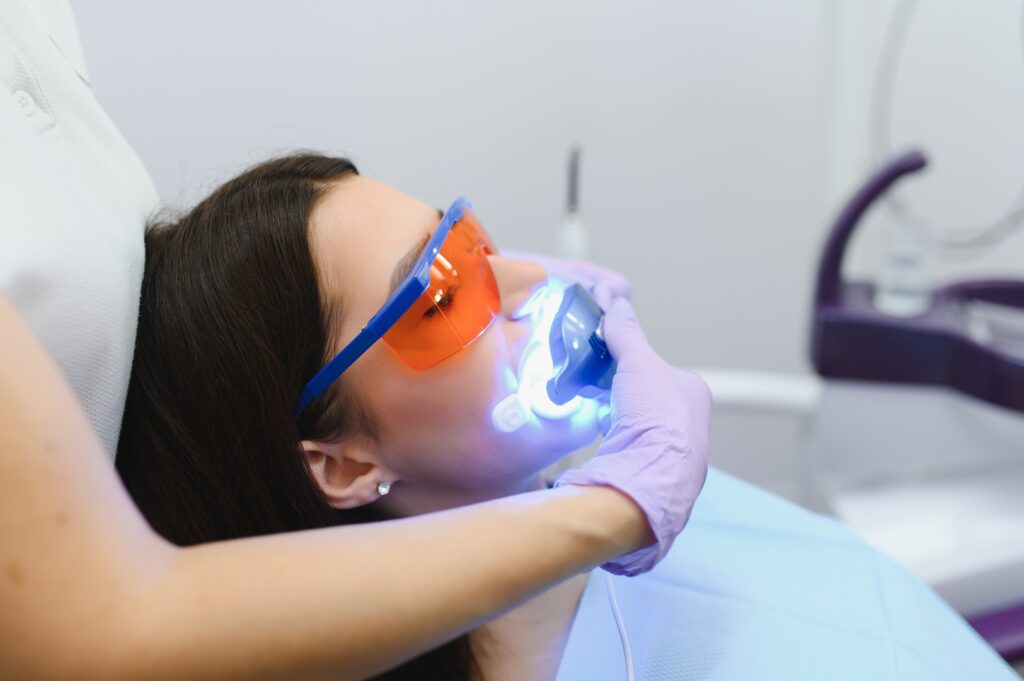
Many patients in Niceville ask the same question before their first whitening appointment: is professional teeth whitening safe for your enamel and gums? It is a fair concern. You want a brighter smile, but not at the cost of your dental health. The good news is that professional whitening, when done correctly, is backed by decades of research. This article breaks down what actually happens to your teeth during treatment and who should approach whitening with caution.
How Professional Teeth Whitening Works on Enamel
Professional whitening uses hydrogen peroxide or carbamide peroxide as the active ingredient. These gels penetrate the outer layer of enamel to break apart stain molecules. The enamel itself is not dissolved or removed during this process. Instead, the peroxide targets discoloration trapped within the enamel structure.
Research published in dental journals consistently shows that clinically supervised whitening does not weaken enamel. Studies measure enamel hardness before and after treatment. Results show no significant loss of mineral density when professional-grade products are used as directed. Over-the-counter strips may carry more risk because patients often misuse them or apply them too frequently.
One key difference with professional treatment is concentration control. Dr. Justine Chase carefully selects the right peroxide percentage for each patient. Lower concentrations used over longer periods cause less sensitivity. Higher concentrations used in-office are applied for shorter, controlled intervals with protective measures in place.
Is Professional Teeth Whitening Safe for Gum Tissue in Niceville?
Gum safety is a legitimate concern. Peroxide gels can irritate soft tissue if they contact the gums directly. Professional whitening addresses this risk in a very specific way. Custom-fitted trays or in-office barriers keep the gel on the teeth and away from gum tissue.
At Mid Bay Dental, in-office whitening includes a protective gel or rubber shield placed along the gum line. This step significantly reduces the chance of irritation. Patients who notice mild gum sensitivity after treatment typically see it resolve within 24 to 48 hours. Persistent irritation is uncommon when treatment is properly supervised.
Home whitening kits from a dentist also protect gum tissue more effectively than store-bought options. Custom trays are molded to your exact tooth shape. This precision fit reduces gel overflow onto soft tissue. Generic trays included in drugstore kits do not offer the same level of protection.
Common Side Effects and How to Manage Them
Tooth sensitivity is the most frequently reported side effect of whitening. It usually appears during treatment or within the first day afterward. The sensation is often described as a sharp, brief twinge when teeth are exposed to hot or cold. This occurs because peroxide temporarily opens microscopic channels in enamel called dentinal tubules.
Most sensitivity resolves on its own within a few days. There are several ways to reduce discomfort during and after treatment:
- Use a toothpaste formulated for sensitive teeth starting one week before treatment
- Avoid very hot or cold foods and drinks for 48 hours after whitening
- Ask your dentist about lower-concentration options if sensitivity is a recurring concern
- Space out whitening sessions to give enamel time to recover
- Rinse with fluoride mouthwash to help remineralize enamel after treatment
Sensitivity from professional whitening is temporary. It is not a sign of permanent enamel damage. Patients who communicate openly with Dr. Chase about discomfort can have their treatment plan adjusted accordingly.
Who Should Avoid or Delay Teeth Whitening
Professional whitening is safe for most healthy adults. However, certain patients should delay or skip whitening entirely. Understanding these exceptions helps you make an informed decision about your care.
Whitening is not recommended in the following situations:
- Active gum disease — inflamed or infected gum tissue reacts poorly to peroxide
- Untreated cavities — open decay allows peroxide to reach sensitive inner tooth layers
- Severely worn enamel — very thin enamel offers less protection from sensitivity
- Exposed tooth roots — roots do not whiten and can become quite sensitive
- Pregnancy or nursing — as a precaution, whitening is typically postponed
- Children and teenagers under 16 — pulp chambers are still developing
- Patients with crowns, veneers, or bonding on front teeth — these restorations do not respond to whitening agents
If you have existing dental work on visible teeth, talk to Dr. Chase before starting any whitening. Whitening your natural teeth while leaving existing restorations unchanged can create a noticeable color mismatch. A comprehensive exam helps identify any underlying issues before treatment begins.
Patients dealing with gum disease should address that condition first. Gum Disease Treatment at Mid Bay Dental can restore tissue health before cosmetic procedures are considered. Treating disease first protects both your comfort and your results.
Professional Whitening vs. Over-the-Counter Products
Many Niceville residents try whitening strips or whitening toothpastes before seeing a dentist. These products are widely available and marketed as safe. They can produce mild improvement over time, but they carry more risk of misuse. Overuse of store-bought products has been linked to increased sensitivity and gum irritation.
Professional treatment provides several advantages over drugstore options:
- Custom-fitted trays prevent gel from contacting gum tissue
- Dentist-supervised concentration levels reduce enamel stress
- Faster, more noticeable results with fewer total applications
- Pre-treatment exam catches any issues that could complicate whitening
- Post-treatment guidance helps maintain results longer
Whitening is just one part of a broader approach to smile confidence. Patients interested in more comprehensive changes often explore Cosmetic Dentistry Niceville options such as veneers or dental bonding. Combining treatments requires careful sequencing, which is another reason professional guidance matters. Some patients also pair whitening with orthodontic treatment through Invisalign Niceville for a more complete smile transformation.
What to Expect at Mid Bay Dental During a Whitening Consultation
Before any whitening treatment begins, Dr. Justine Chase performs a thorough examination. She evaluates your enamel thickness, gum health, and existing restorations. This step ensures whitening is appropriate for your specific situation. It also helps set realistic expectations about the degree of color change you can achieve.
Professional whitening at Mid Bay Dental is a comfortable, well-monitored experience. Patients typically see results several shades lighter after a single in-office session. Take-home trays allow for gradual brightening over one to two weeks. Both approaches are effective and can be tailored to your schedule and sensitivity level.
Patients in Niceville do not need to guess whether whitening is right for them. A short consultation with Dr. Chase answers those questions based on your actual dental health — not generic assumptions. That personalized approach is what makes professional whitening both safer and more effective than going it alone.
Conclusion
Professional teeth whitening is safe for the vast majority of patients when performed under dental supervision. Enamel is not damaged by correctly applied peroxide gels, and gum tissue is protected through custom trays and barriers. Sensitivity is common but temporary. Knowing which patients should wait or opt for alternative treatments is equally important. If you are in Niceville and wondering whether whitening is right for you, the best first step is a professional evaluation. Book Now to schedule your appointment with our team.
Frequently Asked Questions
Does professional teeth whitening damage enamel?
No. Research consistently shows that professional whitening performed under dental supervision does not damage enamel. The peroxide gel breaks apart stain molecules without removing or weakening the enamel structure. Key factors are proper concentration levels and correct application time, both of which a dentist controls.
Why do my teeth feel sensitive after whitening?
Sensitivity after whitening is caused by peroxide temporarily opening small channels in the enamel called dentinal tubules. This exposes nerve endings in the tooth to temperature changes. The effect is short-lived and usually resolves within 24 to 72 hours. Using a desensitizing toothpaste before and after treatment helps reduce discomfort.
Can whitening damage my gums?
Whitening gel can irritate gum tissue if it comes into direct contact with it. Professional whitening prevents this through custom-fitted trays or protective barriers placed along the gum line. Mild gum sensitivity after treatment is possible but typically resolves quickly. Proper application technique makes gum irritation uncommon.
How long do professional whitening results last?
Results typically last between one and three years depending on your diet and oral hygiene habits. Foods and drinks that stain teeth — such as coffee, tea, and red wine — can shorten how long results last. Routine dental cleanings and occasional touch-up treatments help maintain brightness over time.
Is whitening safe if I have crowns or veneers?
Whitening agents do not change the color of crowns, veneers, or dental bonding. Treating natural teeth while leaving restorations unchanged can result in a noticeable color difference. Dr. Chase will evaluate your existing dental work during your consultation and discuss the best approach for an even, natural-looking result.