
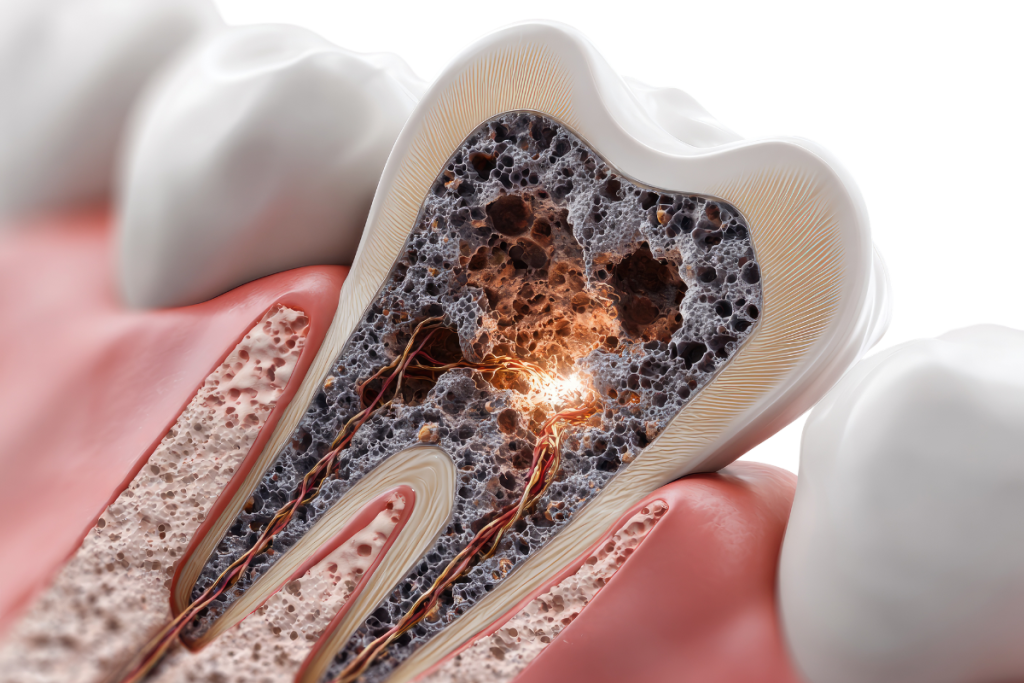
A sharp zing when you sip iced tea. A dull ache after dinner. A deep throb that keeps you up at night. All three are tooth pain, yet they mean very different things. One may be minor. One needs a filling. One can turn serious fast.
Many people on the Emerald Coast wait because the pain comes and goes. Waiting can cost more time, money, and comfort later. This guide shows how each problem feels, what causes it, and when to get help. A comparison chart is included too.
The Short Answer
- Tooth sensitivity: a quick, sharp zing that fades in seconds.
- Cavity: pain that lingers, or a spot or hole you can see or feel.
- Dental infection: constant throbbing, swelling, a bad taste, or fever.
Only an exam can confirm which one you have. Still, knowing the signs helps you act at the right time.
Mid Bay Dental is a dentist niceville, Florida patients can visit for exams, X-rays, and urgent tooth pain. What follows comes from the problems our team sees every week.
What Tooth Sensitivity Feels Like
Sensitivity is a short, sharp pain. It hits when something cold, hot, sweet, or sour touches a tooth, or when cold air hits it. It fades in a few seconds.
It happens when enamel wears thin or gums pull back. That exposes dentin, the softer layer under the enamel. Dentin has tiny channels that lead to the nerve.
Common causes:
- Brushing too hard or with a hard brush
- Gum recession
- Grinding teeth at night
- Acidic foods and drinks
- Recent whitening
A soft brush, light pressure, and toothpaste made for sensitive teeth help many people. Fluoride treatments or bonding at the dental office can cover exposed areas. If the pain lasts for weeks, get it checked. It can hide a crack or early decay.
What a Cavity Feels Like
A cavity is a hole that decay makes in a tooth. Early on, it often does not hurt at all. That is why it sneaks up on people. As it grows, you may notice:
- Pain that lingers after sweets or cold
- A white, brown, or black spot
- A pit or rough edge your tongue keeps finding
- Food that gets stuck in the same spot
- Pain when you bite down
Bacteria turn sugar into acid, and acid eats through enamel. The deeper it goes, the more it hurts. A small cavity needs a small filling. A deep one costs more and can reach the nerve.
One warning: if cavity pain suddenly stops, do not relax. The nerve may have died, and an infection can follow.
What a Dental Infection Feels Like
A dental infection, also called an abscess, is a pocket of pus at the tooth root or in the gum. It starts when bacteria reach the nerve through deep decay, a crack, or gum disease.
Watch for these signs:
- Constant, throbbing pain, often worse when you lie down
- Pain when you chew or touch the tooth
- A swollen gum, cheek, or jaw
- A pimple-like bump on the gum
- A bad taste or bad breath
- Fever or swollen glands under the jaw
- Pain that spreads to the ear or neck
Infections do not heal on their own. Pain may ease if the abscess drains, but the infection is still there. The National Institute of Dental and Craniofacial Research notes that untreated decay can lead to infection.
Side-by-Side Comparison Chart
| Sign | Tooth Sensitivity | Cavity | Dental Infection |
| Pain type | Sharp, quick zing | Mild ache to sharp pain | Deep, throbbing, constant |
| How long it lasts | Seconds | Minutes or longer | Hours to days, little relief |
| Triggers | Cold, heat, air, sweets, brushing | Sweets, cold, biting | Chewing, touch, lying down, or no trigger |
| What you may see | Often nothing, maybe worn gums | Spot, pit, or hole | Swollen gum or face, bump on the gum |
| Other signs | None | Food stuck in one spot | Bad taste, fever, swollen glands |
| How soon to book | Within a few weeks | Within a few weeks | Same day |
| Common treatment | Sensitive toothpaste, fluoride, bonding | Filling | Treat the source, such as a root canal or tooth removal, with antibiotics when needed |
A Quick Self-Check
Ask yourself three questions:
- How long does the pain last? Seconds point to sensitivity. Minutes or more point to a cavity or something deeper.
- Does it hurt without a trigger? Pain at rest or at night points to a deeper problem.
- Do you have swelling or feel sick? Treat that as an infection until a dentist says otherwise.
This is a guide, not a diagnosis. Cracked teeth, gum disease, and sinus trouble can feel the same.
When to Get Help Right Away
Go to the nearest emergency room if you have:
- Swelling that spreads to your face, eye, or neck
- Trouble swallowing or breathing
- A high fever with tooth pain
For throbbing pain, a bump on the gum, or mild swelling without breathing trouble, ask for a same-day dental visit. Rinse gently with warm salt water. Do not place aspirin on the gum. It burns the tissue.
What Happens at the Exam
We start with questions. Where does it hurt? What sets it off? How long has it lasted? Then we check the tooth and gums, tap on the tooth, test it with cold, and take X-rays. X-rays show decay between teeth and signs of infection at the root.
At Mid Bay Dental, we explain the findings, the options, and the cost before treatment starts. Any dentist Niceville has to offer should do the same. If you need a specialist, such as an endodontist, we tell you and refer you.
Local Tips for Emerald Coast Patients
- Sweet drinks on the water. A day on the bayou or at the beach often means a cooler of sweet tea, soda, and sports drinks. Sipping sugar for hours feeds decay. Drink water in between.
- Ice in the heat. Chewing ice can crack teeth and set off sensitivity.
- Military families. Moves and deployments near Eglin Air Force Base can push checkups aside. Mid Bay Dental has a page for veteran care.
- Our location. Our dental office in Niceville is at 4579 E Hwy 20, Suite 210, open Monday to Thursday, 7:30 am to 4:00 pm. Find us on Google Maps.
Habits That Lower Your Risk
The American Dental Association advises brushing twice a day with fluoride toothpaste and cleaning between your teeth once a day. Add these:
- Limit sipping sugary drinks
- Wear a night guard if you grind your teeth
- Visit the dentist about every six months
Meet Our Dentists
Our three dentists bring different training to the same goal: finding the cause of your pain and fixing it.
Dr. Justine Chase, DDS. Dr. Chase opened Mid Bay Dental in 2001. She earned a biology degree from the University of North Carolina at Chapel Hill and her dental degree from the University of Iowa College of Dentistry in 1997. She has trained at the Pankey Institute and the Spear Institute, where she is a faculty club member, and she studied orofacial myofunctional therapy. That long study helps her look at the whole mouth, not only the sore tooth. She belongs to the American Dental Association and the Florida Dental Association, and she volunteers with the Children’s Health Network and Give Kids a Smile.
Dr. Kathleen Hood. Dr. Hood earned both her undergraduate and dental degrees at the University of North Carolina at Chapel Hill. She completed an Advanced Education in General Dentistry residency at the Medical University of South Carolina, with training in hospital dentistry and care for patients with special needs. She has worked in dentistry since 2008 and led a large practice in Jacksonville for three years. She is nitrous oxide certified, which helps patients who feel nervous about pain. She volunteers with Adopt-A-Vet, Missions of Mercy, and Give Kids a Smile.
Dr. Bianca Gardner. Dr. Gardner earned her dental degree at the University of Kentucky College of Dentistry in 2020 on an Army scholarship. She finished an Army general dentistry residency at Joint Base Lewis-McChord and served as a general dentist at Joint Base San Antonio-Fort Sam Houston until 2024. She left active duty in October 2025. Her Army years gave her broad hands-on experience, and she has a strong interest in sleep dentistry, which can matter when night grinding wears down teeth.
Final Thoughts
Sensitivity is brief and sharp. A cavity lingers and grows. An infection throbs, swells, and does not go away. If your pain fits the last two, do not wait for it to stop on its own.
If a tooth is bothering you now, request an appointment and we will find the cause. Mid Bay Dental is a dentist Niceville, Florida families can see Monday through Thursday. You can also read about our dental services first.
Frequently Asked Questions
1. Does tooth sensitivity mean I have a cavity?
Not always. Worn enamel, gum recession, and grinding are common causes. A dentist can check for decay with an exam and X-rays.
2. Can a cavity heal on its own?
Very early enamel damage can harden again with fluoride and better care. Once a hole forms, it needs a filling.
3. How do I know if my toothache is an infection?
Look for constant throbbing, swelling, a bump on the gum, a bad taste, or fever. Any of these needs prompt care.
4. Can a tooth infection go away without treatment?
No. Pain may ease if the abscess drains, but the infection stays and can spread.
5. Do pain relievers fix the problem?
They can ease pain for a short time if you follow the label. They do not treat the cause.
6. Why does my tooth hurt only when I bite?
A cavity, a crack, an infection, or a gum problem can cause it. An exam finds the source.
7. What can I do at home for sensitive teeth?
Use a soft brush, brush gently, and try toothpaste made for sensitive teeth. Limit acidic drinks.
8. How soon should I see a dentist?
For sensitivity or a suspected cavity, book within a few weeks. For infection signs, book the same day. For swelling with trouble breathing or swallowing, go to the emergency room.